
Record your speech
How to record
A recording may feature one person speaking alone or a conversation between two or three people.
Speakers can be of any age, including children and older people. They may have different occupations and backgrounds, live in any region of Slovenia, in a town or village, belong to a Slovene-speaking community in a neighbouring country, be Slovenes living abroad, or be non-native speakers of Slovene. If a recording is commissioned, the person or organisation commissioning it may specify more detailed requirements regarding the speakers.
Everyone taking part in a recording must know that they are being recorded and agree to the use of the recording. Before recording, they must complete and sign the consent form for publication of the recording. For children under the age of 15, the consent form must be signed by a parent or guardian.
Speakers should speak naturally and informally, just as they do in everyday life. It does not matter whether they speak a dialect, colloquial or standard Slovene, slang, jargon, or Slovene as a foreign language.
Each person may take part in only one recording. If you also participate as a citizen scientist, your own speech across all the recordings you submit should not exceed two hours in total.
The recording environment should be as quiet as possible, preferably at home. There should be no background music, other people talking, traffic noise or similar distractions. To create a relaxed atmosphere, you can have coffee, tea or another drink during the recording.
The recording can take place with everyone in the same room, talking face to face. Alternatively, the conversation can take place remotely using a phone, tablet or computer, with either audio or video. A person can also record themselves speaking alone, without anyone else present.
Enter information about the setting, time, location, recording method and other circumstances in the recording circumstances form.
The content of the recording should be anonymous. If other people are mentioned, use first names only, without surnames, unless they are public figures or celebrities.
A relaxed conversation between two or three people spending time together. The conversation may be serious or light-hearted, but it should be spontaneous and natural, without advance preparation.
It is important for the people being recorded to agree in advance on the topics they will discuss and to choose only topics they are comfortable sharing publicly.
A conversation in which one person asks questions and another person, or two other people, answer them. Questions may be prepared in advance or arise during the conversation. Answers should be spontaneous rather than prepared in advance.
The interview should avoid topics that are sensitive for the interviewee or unsuitable for public release. It may also be conducted for research purposes.
A conversation in which two or three people share their opinions, ideas and arguments on topics they have chosen in advance.
It is important that the people being recorded do not choose topics they would not want to discuss publicly.
One person speaking alone, or a conversation between two or three people, in which one person explains how to make, do or achieve something. A single recording may include several different sets of instructions.
If it is a conversation, the second person, and the third if present, should participate actively by asking questions and checking that they have understood correctly. Participants may take turns giving instructions.
The instructions should cover topics that the people being recorded are comfortable sharing publicly.
One person tells stories about events or experiences from their own or other people’s real lives, rather than stories from books or films. A single recording may include several stories.
If a second and third person are present, they can also take turns telling stories.
The stories should only be about events or experiences that the people being recorded are comfortable sharing publicly.
One person describes or explains things, concepts, events or phenomena to help others understand them better. A single recording may contain several different explanations.
If it is a conversation, the second person, and the third if present, should participate actively by asking questions and checking that they have understood correctly. Participants may take turns explaining.
The explanations should cover topics that the people being recorded are comfortable sharing publicly.
The child should talk to someone they know well and in a place where they feel comfortable and relaxed. The conversation can take place while playing. Ask the child questions about what they are doing. Show them a picture or an object and invite them to describe it. Ask them to retell their favourite fairy tale or make up a story. You can also ask them about everyday activities and similar topics.
Questions should not be too personal or encourage the child to talk about other people.
Suggested topics
- hobbies
- sport and recreation
- music
- travel
- technology
- food
- games
- space
- health
- TV series and films
- culture
- cars and motorcycles
- climate
- celebrities
- environment
- media
- education
- healthcare
- work
- science
- children and childhood
- holidays and traditions
- everyday events
- transport and mobility
- pets
- parenting
- current affairs
You can use a phone, computer or other recording device. Place the device on a stable surface and keep the microphone as close to the speakers as possible so that their speech can be heard clearly. Do not move the phone or other recording device during the recording, and make sure the recording environment is as quiet as possible.
The recording may be audio or video. It is important to achieve the highest possible recording quality. The recommended audio format is WAV (44.1 kHz, PCM, 16-bit, mono).
For smartphone recordings, we recommend the following mobile apps:
- For Android: Voice Recorder
- For iOS: Voice Record Pro
Before submitting a recording, make sure that the speech is clearly audible and that there is no distracting background noise.
Each recording must be at least 10 minutes and no more than 60 minutes long. There should be no very long pauses lasting several minutes.
You may trim the beginning or end of the recording and submit only part of the recorded speech. Make the cut during a pause, before the start of a new topic or utterance.
Make as many recordings as you can find different speakers. Each speaker may appear in only one recording. If you also participate as a speaker, your own speech across all the recordings you submit should not exceed two hours in total.
For each recording, forms providing information about the recording circumstances and each speaker in the recording must be completed and signed. Take a photo of the completed and signed forms and upload them when submitting the recording. The same information must also be entered in the online form when the recording is submitted. Recordings without signed forms will be rejected.
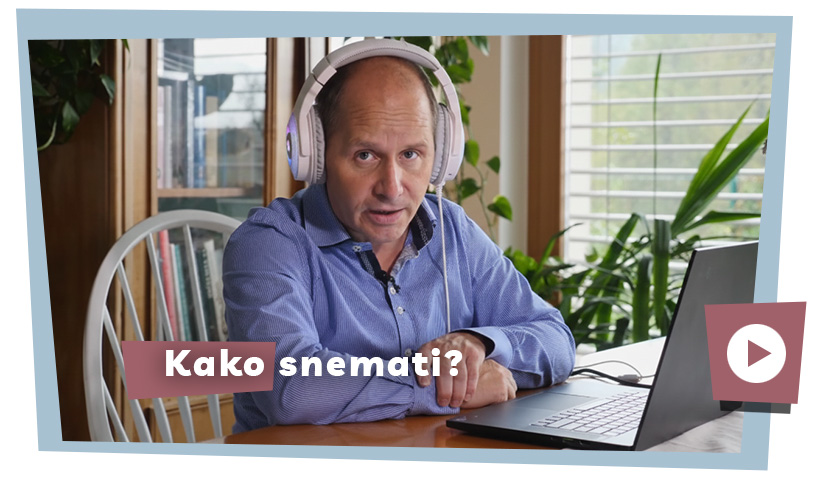
The video is in Slovenian and provides instructions on how to record and submit a recording.